
Sponsored Ads

Sponsored Ads

Short Summary
The Zyn lawsuit refers to a growing group of legal actions against Philip Morris International and Swedish Match, the makers of Zyn nicotine pouches, over claims of deceptive "tobacco-free" marketing, youth-focused advertising, and failure to warn about addiction risk. A federal trial in one case is scheduled for December 7, 2026, while other suits, including one from the City of Baltimore, are still in earlier stages. No public settlement or payout program exists yet.
Zyn Lawsuit: 2026 Update on Claims, Trial Date, and Status
Yes, there is an active Zyn lawsuit, and in fact, there are several. Individuals, a class of consumers, and the City of Baltimore have all sued Philip Morris International and its subsidiary Swedish Match, alleging the companies deceptively marketed Zyn nicotine pouches as "tobacco-free" and safe while downplaying addiction risk and marketing to minors. The most advanced case is scheduled for a jury trial on December 7, 2026, in federal court in Florida. No settlement or compensation fund has been announced.
What Is Zyn, and Why Is It Being Sued Over?
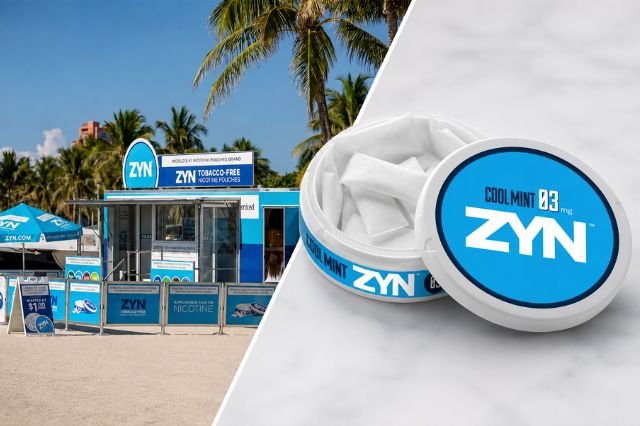
Zyn is a small, flavored nicotine pouch that users place between the gum and lip. It was originally developed by Swedish Match, which Philip Morris International acquired in 2022 for roughly $16 billion. According to PMI's own 2025 full-year results, Zyn now accounts for close to 70% of the U.S. nicotine pouch market and about 40% of the pouch category worldwide, with U.S. shipments up 37% year over year to nearly 12 billion pouches.
Nicotine is well established as a highly addictive substance, and public health researchers have found that most people who use nicotine products start before age 18, with a large majority continuing into adulthood. Plaintiffs argue Zyn's marketing flavor variety, social-media "Zynfluencer" campaigns, and lifestyle-focused advertising were built to appeal to exactly that group, even though nicotine pouches are legally restricted to buyers 21 and older.
Zyn Lawsuit Update: Current Status (as of July 2026)
| Case | Court | Status | Key Date |
| Wolters v. Swedish Match North America, et al. (Case No. 3:24-cv-00417-AGS-MMP) | U.S. District Court, S.D. California | Individual injury suit alleging design defect, failure to warn | Filed March 1, 2024 |
| Kelly, Palmer, and related consolidated suits | U.S. District Court, S.D. Florida | Design-defect and failure-to-warn claims allowed to proceed; a fraudulent-concealment claim was dismissed without prejudice | Ruling issued March 19, 2025 |
| Friedman v. Philip Morris International, et al. | U.S. District Court, S.D. Florida (Judge William P. Dimitrouleas) | Pretrial motions due; mediation ordered | Trial set for December 7, 2026 |
| City of Baltimore v. Philip Morris International, et al. | Baltimore Circuit Court | Government enforcement action under Baltimore's Consumer Protection Ordinance, seeking civil penalties and an injunction | Filed May 7, 2025 |
| Siegert v. Swedish Match North America, et al. | U.S. District Court, District of Connecticut | Proposed class action over "tobacco-free" and nicotine-strength labeling | Filed September 26, 2025 |
| Antitrust pricing suit (dismissed) | U.S. District Court, E.D. Virginia | Dismissed; judge found no plausible harm to competition from the PMI–Swedish Match merger | Dismissed September 2025 |
Some legal-marketing sites report that federal courts are weighing formal MDL (multidistrict litigation) consolidation of the various Zyn injury suits. That has not been confirmed through the U.S. Judicial Panel on Multidistrict Litigation's public docket as of this update, so treat it as an unconfirmed development to watch rather than a settled fact.
Separately, Swedish Match North America agreed in 2026 to pay $1.2 million and adopt distributor-monitoring measures to resolve a Washington, D.C. investigation into violations of the city's flavored-tobacco sales ban, a regulatory action, not part of the personal-injury litigation, but relevant background on the company's compliance history.
Who Are the Parties in the Zyn Lawsuit?
The defendants named across the various suits include:
- Philip Morris International, Inc., headquartered in Stamford, Connecticut, and incorporated in Virginia.
- Swedish Match North America, LLC and Swedish Match USA, Inc., headquartered in Richmond, Virginia.
- Related PMI entities, including Philip Morris Global Brands, Inc. and PMI Global Services, Inc., named in some individual suits.
Plaintiffs vary by case. In the original Wolters complaint, the plaintiff alleges he began using Zyn as a teenager around 2019, became addicted, and developed dental problems he attributes to the product. In the Florida cases, plaintiffs Zachary Kelly, Kovadis Palmer, and Alannah Friedman make similar allegations of nicotine dependency that began in their teenage years, along with claims that they weren't adequately warned about the products' risks.
What Do the Lawsuits Allege Is Wrong With Zyn?
Across the various complaints, plaintiffs raise several core allegations:
"Tobacco-free" claims are misleading. Zyn pouches don't contain tobacco leaf, but the nicotine inside is extracted from tobacco, not synthesized. The Siegert complaint cites lab studies reporting formaldehyde, ammonia, nickel, and chromium in the pouches, along with tobacco-specific nitrosamines (including NNN and NNK) that are linked to increased cancer risk. Plaintiffs argue the "tobacco-free" label misleads buyers into thinking the health risks of tobacco don't apply.
Nicotine content and absorption aren't clearly disclosed. Packaging lists nicotine in milligrams (commonly 3mg or 6mg per pouch), but plaintiffs argue this doesn't help most consumers understand actual absorption. Court filings cite Zyn's own research indicating that a 3mg pouch delivers about 1.59mg of absorbed nicotine, and a 6mg pouch about 3.51 mg, figures plaintiffs' attorneys have compared to the nicotine absorbed from smoking multiple cigarettes, though this is a comparison made in litigation filings, not an independently verified medical equivalence.
Marketing allegedly targeted minors. Complaints point to flavor variety, youth-oriented imagery, and social-media influencer promotion as tactics that appeal to teens despite the 21-plus legal purchase age. Baltimore's suit cites survey data suggesting a majority of underage nicotine-pouch users prefer Zyn specifically.
Health risks weren't adequately disclosed. Beyond addiction, plaintiffs point to research associating nicotine use with cardiovascular, respiratory, and oral-health harm, including gum disease, and argue the label's brief addiction warning ("This product contains nicotine. Nicotine is an addictive chemical.") doesn't convey the scope of the risk.
It's worth noting a countervailing regulatory development: in June 2026, the FDA authorized 20 Zyn products to carry a specific modified-risk marketing claim, stating that using Zyn instead of cigarettes puts smokers at lower risk of several smoking-related diseases. That authorization applies narrowly to specific products, for a specific comparison to cigarettes, aimed at adult smokers, and doesn't address the marketing-to-minors or "tobacco-free" claims at issue in the lawsuits.
Zyn Lawsuit Settlement and Compensation: What Might Be Available?
No class-wide Zyn settlement or payout program has been announced as of this update. Where lawsuits are proceeding, plaintiffs are generally seeking:
- Compensation for medical costs, pain and suffering, emotional distress, and other economic losses tied to alleged Zyn-related injuries
- Punitive damages
- Attorneys' fees and costs
- In the class actions, class certification and a jury trial on the merits
- In Baltimore's case, civil penalties and an injunction against the challenged marketing practices, rather than individual compensation
Because these cases haven't reached trial or settlement, there's no reliable public figure for what an individual claim might be worth. Any specific payout estimate you see elsewhere for "Zyn lawsuit compensation" is speculative at this stage; treat those numbers with caution.
Who May Be Affected, and What to Do Next
You may want to look into a possible claim if you started using Zyn as a minor, have a documented nicotine addiction or related health condition (such as gum disease) you believe is connected to Zyn use, and haven't already resolved a related claim. Because filing deadlines (statutes of limitations) vary by state and by claim type, and can depend on when you reasonably discovered the connection between your injury and the product, there's no single answer for how much time you have.
General steps if you believe you may be affected:
- Document your use and any related health issues - receipts, purchase history, and medical records.
- Consult a licensed attorney in your state to evaluate whether your situation and timeline fit an existing case or class.
- Watch official channels - court dockets (via PACER) and the FDA's tobacco product newsroom are the most reliable sources for status updates, rather than attorney-marketing sites.
This is general information, not legal advice, and it isn't a substitute for speaking with a licensed attorney about your specific situation. If your claim ever proceeds to a jury trial and you're called for jury duty, it's worth knowing what's expected of you as a juror as well.
For a sense of how a comparable 2026 consumer product-liability case has unfolded, including how claims, timelines, and eligibility windows typically develop, see our coverage of the Tampax lawsuit.
Frequently Asked Questions
Q1. Are there any harmful chemicals in Zyn?
Zyn pouches contain nicotine derived from tobacco, along with flavorings and fillers. Lawsuit filings cite independent lab testing that found formaldehyde, ammonia, nickel, and chromium in the pouches, as well as tobacco-specific nitrosamines (NNN and NNK) linked to elevated cancer risk. These are allegations made in litigation, not conclusions from an FDA safety recall.
Q2. Is there a Zyn lawsuit?
Yes. Multiple lawsuits are active, including individual injury suits, a proposed class action over "tobacco-free" labeling, and a government enforcement suit from the City of Baltimore. One case is scheduled for a federal jury trial on December 7, 2026. No settlement has been reached in any of them.
Q3. How many cigarettes is one 6mg Zyn equal to?
There's no official medical equivalence chart. Litigation filings cite Zyn's own data showing a 6mg pouch delivers roughly 3.51mg of absorbed nicotine, versus about 1mg typically absorbed per cigarette, a comparison plaintiffs' attorneys use to argue Zyn delivers more nicotine per unit than a single cigarette. This figure comes from court filings, not an FDA or CDC equivalence standard.
Q4. Is Zyn the safest form of nicotine?
Not by any independent standard. In June 2026, the FDA authorized a narrow claim that Zyn poses a lower risk than cigarettes for specific diseases when used by adult smokers as a substitute, but that authorization doesn't mean Zyn is risk-free or safer than other nicotine-replacement products like FDA-approved gum or lozenges, and it doesn't address the addiction and marketing concerns raised in the pending lawsuits.
Sources
- FDA: FDA Authorizes 20 ZYN Nicotine Pouches to Be Marketed with Specific Modified Risk Claim
- AboutLawsuits.com: Zyn Lawsuit Over Nicotine Pouch Addiction Set for Trial in December 2026
- AboutLawsuits.com: Zyn Lawsuit Filed by Baltimore Over Youth Marketing and Nicotine Addiction Risks
- Office of the Attorney General for the District of Columbia: AG Schwalb Announces Zyn Manufacturer Will Pay $1.2 Million
- Reuters (via Tobacco Journal International republication): Judge Dismisses Zyn Antitrust Lawsuit
- Philip Morris International: 2025 Fourth-Quarter & Full-Year Results