
Sponsored Ads

Sponsored Ads

CASE SUMMARY
As of July 2026, spinal cord stimulator lawsuits are active against Boston Scientific, Abbott, Medtronic, and Nevro over device defects, lead migration, and shock injuries. The Judicial Panel on Multidistrict Litigation created MDL No. 3181 for Boston Scientific claims on June 5, 2026, while other manufacturer cases remain filed individually. No global settlement or jury verdict has been reached yet, so any settlement figures circulating online are attorney estimates, not confirmed averages.
A spinal cord stimulator lawsuit is a product liability claim filed against device makers, most often Boston Scientific, Abbott, Medtronic, or Nevro, alleging their implants caused shocks, burns, lead migration, or worsening pain that required revision surgery. As of July 2026, these cases are proceeding as individual lawsuits and one multidistrict litigation (MDL No. 3181), with no nationwide settlement or trial verdict yet reached. This page covers the current docket status, verified case numbers, recall history, and what to do if you believe you were harmed.
What Is the Spinal Cord Stimulator Lawsuit About?
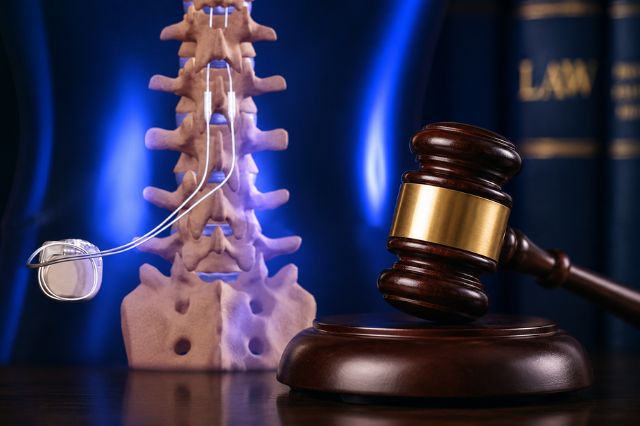
A spinal cord stimulator (SCS) is an implanted device with a battery-powered pulse generator, leads placed near the spinal cord, and an external controller. It is designed to send low-level electrical pulses that interrupt pain signals before they reach the brain, most often for patients with chronic back pain or post-surgical nerve pain.
Plaintiffs in spinal cord stimulator lawsuits allege that manufacturers used the FDA's premarket approval (PMA) supplement pathway to make repeated hardware, firmware, and battery changes without new clinical trials or full FDA review. According to court filings, one Abbott Proclaim XR5 complaint traces its PMA lineage back to a device originally approved in 2001, despite more than 230 supplemental changes allegedly made since then, per a complaint reviewed by Lawsuit Information Center.
Common allegations across these spinal cord stimulator lawsuit filings include manufacturing defects, failure to warn physicians and patients about known risks, lead migration or fracture, unauthorized reprogramming by sales representatives rather than licensed clinicians, and failure to report adverse events to the FDA as required by law.
What Is the Current Status of the Spinal Cord Stimulator Lawsuit? (July 2026)
The most significant development in the spinal cord stimulator lawsuit is the creation of a federal multidistrict litigation for claims against Boston Scientific. Here is the verified timeline as of July 6, 2026:
• March 5, 2026: Plaintiffs petitioned the U.S. Judicial Panel on Multidistrict Litigation (JPML) to consolidate spinal cord stimulator cases against Abbott and Boston Scientific, citing at least 15 federal lawsuits pending across several districts, according to AboutLawsuits.com.
• May 28, 2026: The JPML held oral argument in Milwaukee on whether to centralize the cases, considering claims against both Abbott and Boston Scientific.
• June 5, 2026: The JPML created In re Boston Scientific Corporation Spinal Cord Stimulator Products Liability Litigation, MDL No. 3181, centralized in the U.S. District Court for the Central District of California before Judge Josephine L. Staton.
• The transfer order indicates 23 Boston Scientific spinal cord stimulator lawsuits were pending in nine federal districts at the time of centralization, according to Saiontz & Kirk's review of the order.
The JPML did not create a parallel MDL for Abbott, Medtronic, or Nevro. As of this writing, lawsuits against those three manufacturers continue to be filed and litigated individually in various federal and state courts rather than as part of a consolidated proceeding.
No settlement, bellwether trial verdict, or class-wide judgment has been announced in the Boston Scientific MDL or in any individual spinal cord stimulator case against these manufacturers as of July 2026.
Which Companies Are Named in Spinal Cord Stimulator Lawsuit Filings?
Four manufacturers account for the large majority of pending spinal cord stimulator lawsuit activity: Boston Scientific, Abbott (which acquired St. Jude Medical in January 2017), Medtronic, and Nevro.
Boston Scientific Spinal Cord Stimulator Lawsuit
Boston Scientific faces the only current MDL (No. 3181) over its Precision Montage MRI, WaveWriter Alpha, and Spectra WaveWriter systems. In Martini v. Boston Scientific Corporation and the U.S. Food and Drug Administration, Case No. 2:26-cv-00825, filed January 27, 2026, in the Central District of California by the firm Davis & Crump, the plaintiff alleges Boston Scientific made cumulative design changes without pursuing a new PMA review, in violation of 21 C.F.R. Section 814.39(a).
A separate case, Lawler v. Boston Scientific, filed May 1, 2025, in the same district, alleges a Spectra WaveWriter implant's leads migrated within weeks of implantation, requiring revision surgery, after which the plaintiff developed cardiac arrhythmia.
Abbott Spinal Cord Stimulator Lawsuit and Problems
Abbott spinal cord stimulator problems named in litigation involve the Proclaim, Infinity, and Eterna platforms. In Stookey v. Abbott Laboratories, filed April 14, 2026, in the Northern District of Illinois, the plaintiff alleges a Proclaim implant failed to relieve pain and caused neurological complications requiring additional surgery.
New Abbott Eterna claims, including Tuttle v. Abbott, were on file as of January 27, 2026, according to Nigh Goldenberg Raso, alleging rapid lead migration and reprogramming by sales representatives without medical training.
Nevro Spinal Cord Stimulator Lawsuit Update
Three new Nevro spinal cord stimulator lawsuits were filed in the Northern District of California on March 23, 2026. The complaints allege the devices were defectively designed, improperly programmed by unlicensed sales representatives, and marketed as safe and effective despite design changes made under the FDA's 510(k) pathway rather than full premarket approval.
Medtronic and St. Jude Spinal Cord Stimulator Lawsuit
Medtronic spinal cord stimulator lawsuits target the Intellis, Inceptiv, Synergy, Vanta, Vectris, and Restore systems, with claims that the company made design changes since its original 1984 FDA approval without notifying the agency. Between April 22, 2026 and May 29, 2026 alone, the FDA's MAUDE database received 500 injury reports tied to the Intellis system, according to Robert King Law Firm's review of federal adverse event data.
St. Jude Medical spinal cord stimulator claims predate Abbott's 2017 acquisition of the company and largely concern the Eon and Eon Mini systems, which were the subject of a 2011 recall over battery weld defects that caused overheating and charging failures.
What Recalls Have Been Issued for Spinal Cord Stimulators?
The FDA has issued more than 40 recalls of spinal cord stimulation devices since 2010, according to Sokolove Law's review of FDA recall data. The table below lists the recalls most frequently cited in current litigation.
The FDA has issued more than 40 recalls of spinal cord stimulation devices since 2010, according to Sokolove Law's review of FDA recall data. The table below lists the recalls most frequently cited in current litigation.
| Date | Manufacturer / Device | FDA Class | Reason |
| 2011 | St. Jude Medical Eon / Eon Mini | Recall | Battery weld defects causing electrolyte leaks, charging failures, overheating |
| Sept. 13, 2023 | Abbott Proclaim / Infinity IPGs | Class I | Devices stuck in MRI mode, over 155,000 units affected, per Sokolove Law |
| July 2024 | Boston Scientific WaveWriter Alpha | Recall | Software flaw causing unexpected resets during charging, 77,674 units, per TruLaw |
| Ongoing | Medtronic Intellis, Inceptiv, Vanta, Restore | Multiple | At least 23 separate recalls of SCS devices, accessories, and software, per Robert King Law Firm |
Beyond formal recalls, an Associated Press investigation found that between 1984 and 2018 the FDA approved only 6 new spinal cord stimulator devices outright, while manufacturers made 835 supplemental changes to those devices through the PMA supplement pathway, which generally does not require new clinical trials, as reported by Sokolove Law.
What Complications Have Patients Reported?
Attorneys marketing spinal cord stimulator cases sometimes describe patient accounts as “horror stories,” but the documented pattern across court filings and FDA reports is consistent and specific rather than anecdotal. Reported complications include:
• Lead migration or fracture requiring revision or explant surgery
• Unexpected electrical shocks, jolts, or device resets during normal use or charging
• Burning sensations at the implant or lead site, in some filings linked to devices operating above FDA-approved temperature limits
• Infection at the implant site
• Loss of bowel or bladder control and other autonomic symptoms
• Worsening pain rather than the promised relief, sometimes followed by permanent nerve damage or partial paralysis
Exact nationwide complication rates have not been independently verified for this article. Some law firm marketing pages cite figures such as 13.2% of cases involving lead migration or 30% of patients reporting inadequate pain relief; these figures come from third-party legal marketing analysis of FDA data rather than a peer-reviewed study, and readers should treat them as estimates rather than confirmed statistics.
What Is the Average Settlement for a Spinal Cord Stimulator?
There is no confirmed average settlement for a spinal cord stimulator lawsuit as of July 2026. No manufacturer has reached a global settlement, and no bellwether trial verdict has been issued in MDL No. 3181 or in any individual case against Boston Scientific, Abbott, Medtronic, or Nevro over device defects.
The one publicly reported figure tied to a spinal cord stimulator injury is a $1.25 million settlement reached in 2024, involving a New Jersey man whose device compressed his spinal column and worsened his mobility. That case was resolved as a medical malpractice claim rather than a manufacturer product liability lawsuit, so it does not reflect what a defect-based spinal cord stimulator claim against a device maker would be worth.
In the absence of verified outcomes, personal injury and mass tort firms publish speculative estimate ranges that vary widely: some cite $50,000 to $500,000, others cite $75,000 to $1.5 million or more, and still others cite $250,000 to $600,000. These figures are explicitly labeled as projections by the firms that publish them, are not based on any finalized spinal cord stimulator settlement, and should not be treated as a promise of what any individual case is worth. Actual compensation, if any is obtained, would depend on injury severity, number of surgeries, lost income, and the strength of the evidence in each case.
Am I Eligible to File a Spinal Cord Stimulator Lawsuit?
You may be eligible to explore a spinal cord stimulator claim if the following generally apply to your situation, though an attorney would need to confirm eligibility based on your specific facts and state law:
• You had a spinal cord stimulator implanted, typically within the past several years, made by Boston Scientific, Abbott/St. Jude Medical, Medtronic, or Nevro
• You experienced a complication such as lead migration or fracture, unexpected shocks, burns, infection, loss of bowel or bladder control, or worsening pain
• You required revision surgery, explant surgery, or additional medical treatment because of the complication
• Your claim falls within your state's statute of limitations, which most firms describe as ranging from roughly 1 to 6 years from the date of injury or the date you discovered the device caused your harm, depending on the state
This is general information only and is not personalized legal advice. Only a licensed attorney reviewing your medical records and state law can determine whether you are eligible to file a spinal cord stimulator claim.
What Should I Do If I Believe I Was Harmed by a Spinal Cord Stimulator?
If you believe a spinal cord stimulator caused you harm, the following general steps are commonly recommended before or alongside speaking with an attorney:
• Seek medical attention for any new or worsening symptoms and follow your doctor's guidance before making any legal decisions
• Identify your device's manufacturer, model, and serial number, usually found on your implant card or in your surgical records
• Request copies of your medical records, including operative reports, device interrogation logs, and any notes describing complications
• Report the adverse event to the FDA through its MedWatch voluntary reporting program, which is separate from and does not replace a legal claim
• Consult a spinal cord stimulator attorney or lawyer who handles medical device litigation to review your records and advise you on deadlines and options, most of whom offer free case evaluations on a contingency-fee basis
Acting promptly matters because statutes of limitations can bar a claim entirely once the deadline passes, and evidence such as device data can be harder to obtain over time.
Is a Spinal Cord Stimulator Worth the Risk?
Whether a spinal cord stimulator is worth the risk depends on the individual patient, and this is a medical decision that should be made with a treating physician, not a legal or editorial judgment. Spinal cord stimulation has helped many patients reduce chronic pain after other treatments failed, and the FDA continues to authorize these devices for that purpose.
At the same time, independent reviewers have raised questions about long-term benefit. A 2023 Cochrane Database systematic review of spinal cord stimulation for low back pain, cited in recent Boston Scientific litigation filings, is among the studies courts have referenced when evaluating these claims. Regulators in Australia also reviewed the devices; the Therapeutic Goods Administration restricted certain spinal cord stimulators in 2024 after a government-linked study found no clear long-term benefit for some patients, according to ABC News Australia reporting cited in industry coverage.
In the United States, the FDA issued a safety communication in September 2020 recommending that doctors conduct a trial stimulation period before permanent implantation, specifically to help determine whether a device provides meaningful relief and to reduce the risk of complications before committing to a permanent implant.
Which Company Has the Best Spinal Cord Stimulator?
No independent regulatory body or court has ranked Boston Scientific, Abbott, Medtronic, or Nevro devices as “best,” and this article does not endorse or recommend any manufacturer. All four companies have faced FDA recalls, adverse event reports, and product liability litigation over their spinal cord stimulator lines.
Patients considering a spinal cord stimulator, or comparing devices after a complication, are generally better served by reviewing a specific device's FDA recall history, its individual clinical trial data, and its own physician's recommendation than by relying on brand reputation. That comparison is a medical decision and falls outside the scope of legal reporting.
Is There a Class Action Lawsuit for Spinal Cord Stimulator Claims?
No, spinal cord stimulator claims are not proceeding as a single class action lawsuit as of July 2026. Instead, cases against Boston Scientific are consolidated into a multidistrict litigation, MDL No. 3181, and cases against Abbott, Medtronic, and Nevro continue as individual lawsuits filed in various courts.
An MDL differs from a class action. In a class action, plaintiffs are grouped together and typically share a single outcome or settlement fund. In an MDL, each plaintiff's case remains legally separate; cases are only combined for pretrial matters such as discovery and expert testimony, and each case can still settle, go to trial, or be dismissed on its own individual facts.
How Do I Find a Spinal Cord Stimulator Attorney?
Multiple firms are currently accepting spinal cord stimulator lawsuit cases, including Davis & Crump, TorHoerman Law, Saiontz & Kirk, TruLaw, Nigh Goldenberg Raso, and others named in this article's sources. Most spinal cord stimulator lawyers handling these claims work on a contingency-fee basis, meaning you generally pay no upfront cost and the firm is paid only if your case results in a settlement or award.
Because the litigation is spread across an active MDL and multiple individually filed cases, it is worth asking any spinal cord stimulator attorney you consult which manufacturer and court their firm is filing in, whether your case would go into MDL No. 3181, and how they handle cases outside that MDL. The choice of a lawyer is an important decision that should not be based solely on advertising.
Frequently Asked Questions
What is the average settlement for a spinal cord stimulator?
There is no confirmed average settlement as of July 2026, because no global settlement or trial verdict has been reached against any spinal cord stimulator manufacturer. Estimate ranges published by law firms vary widely, from roughly $50,000 to more than $1.5 million, and are speculative projections rather than verified figures.
Is a spinal cord stimulator worth the risk?
This depends on the individual patient and is a medical decision, not a legal one. Many patients get meaningful pain relief, while others experience complications such as lead migration, shocks, or infection; the FDA recommends a trial stimulation period before permanent implantation specifically to help assess this risk beforehand.
Which company has the best spinal cord stimulator?
No regulator or court has ranked any manufacturer's spinal cord stimulator as the best. Boston Scientific, Abbott, Medtronic, and Nevro have all faced FDA recalls and product liability lawsuits, so device choice is best discussed with a treating physician based on a specific device's safety and clinical data.
Is there a class action lawsuit for spinal cord stimulator claims?
No. Spinal cord stimulator cases against Boston Scientific are consolidated in MDL No. 3181, a multidistrict litigation, not a class action, and cases against Abbott, Medtronic, and Nevro are being filed as individual lawsuits. In an MDL, each case is decided on its own facts rather than sharing one collective outcome.
Sponsored Ads

Sponsored Ads