AFFF Lawsuit 2026: Legal Rights, Settlement Updates, and What Claimants Need to Know
Jonas Hill - 2026-06-16

Sponsored Ads

Sponsored Ads

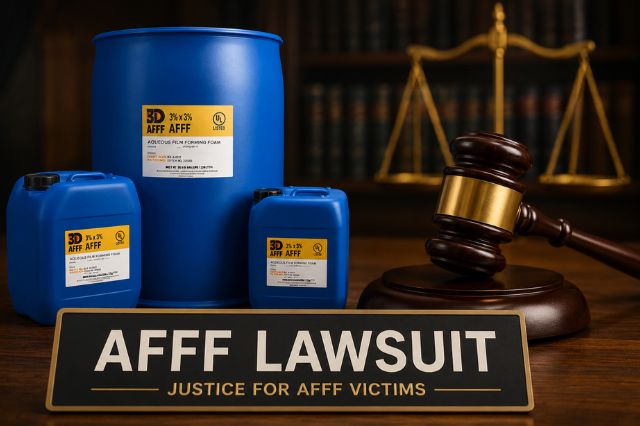
Case Summary The AFFF lawsuit involves claims that manufacturers of Aqueous Film-Forming Foam (AFFF) knowingly sold firefighting foam containing harmful PFAS chemicals, often called "forever chemicals," without adequately warning users of the associated health risks. Thousands of firefighters, military veterans, Navy personnel, airport workers, and others allege that prolonged exposure to AFFF caused serious illnesses, including kidney cancer, testicular cancer, thyroid cancer, liver cancer, and ulcerative colitis. The litigation is being coordinated through a federal multidistrict litigation (MDL) in South Carolina. While several water contamination settlements have been reached, personal injury claims remain active in 2026.
The AFFF lawsuit has become one of the most significant mass tort litigations in United States legal history. Aqueous Film-Forming Foam, commonly known as AFFF, was used for decades across military bases, airports, fire departments, and industrial facilities. Researchers later confirmed that AFFF products contain per- and polyfluoroalkyl substances, commonly called PFAS or forever chemicals. These substances accumulate in the human body over time and have been linked to several serious cancers and chronic illnesses. Thousands of firefighters, military veterans, Navy personnel, and airport workers have now filed AFFF cancer lawsuits seeking compensation for injuries caused by prolonged PFAS exposure.
AFFF firefighting foam was developed to suppress flammable liquid fires involving jet fuel, gasoline, and other petroleum products. It became the standard tool in military firefighting operations and commercial airports because of its effectiveness at quickly smothering fuel-based fires. However, the same chemical properties that make AFFF effective also make it hazardous. PFAS chemicals in AFFF resist heat, water, and oil, which means they do not break down naturally in the environment or the human body.
Exposure to PFAS-containing AFFF foam occurs through direct skin contact during training exercises, inhalation of foam particles, and contamination of drinking water near military installations and airports. Because PFAS chemicals persist in the bloodstream for years, individuals who were repeatedly exposed face compounding health risks over time.
Scientific research and court evidence have connected PFAS exposure to the following qualifying conditions:
• Kidney cancer
• Testicular cancer
• Thyroid cancer and thyroid disease
• Liver cancer
• Ulcerative colitis
• High cholesterol
• Immune system dysfunction
Kidney cancer and testicular cancer are among the most frequently cited injuries in AFFF personal injury claims. Courts have given these diagnoses substantial weight during settlement negotiations because of the strength of scientific studies linking PFAS exposure to these conditions.
AFFF lawsuit qualifications generally require three elements. First, the claimant must have experienced documented exposure to AFFF firefighting foam through employment, military service, or contaminated water sources. Second, the claimant must have received a verified medical diagnosis of a qualifying illness. Third, there must be a traceable connection between the exposure and the diagnosed condition supported by medical records and employment or service history.
Groups most likely to qualify include career firefighters and fire trainees who used AFFF during live drills, military veterans and active-duty personnel stationed at bases where AFFF was routinely deployed, Navy service members who used AFFF aboard ships and at naval air stations, airport emergency responders and crash rescue teams, and residents living near contaminated military or industrial sites.
AFFF litigation is primarily governed through a federal multidistrict litigation process, known as MDL. In 2019, the United States Judicial Panel on Multidistrict Litigation consolidated AFFF-related personal injury and environmental contamination cases into MDL No. 2873 in the District of South Carolina. This consolidation allows a single federal judge to manage pre-trial proceedings across thousands of individual lawsuits simultaneously, creating uniform discovery rules and consistent legal standards.
Under the MDL framework, cases are grouped into two primary categories. The first covers personal injury claims where individuals allege that AFFF exposure caused cancer or other serious health conditions. The second covers water contamination claims brought by municipalities and water utilities whose drinking water supplies became contaminated with PFAS chemicals. Several major water contamination settlements have already been reached, most notably a settlement involving 3M. Personal injury claims, however, remain in active litigation.
The AFFF litigation presents several notable legal complications that affect how cases move forward and how settlements are determined.
Proving medical causation is one of the most difficult legal hurdles in AFFF claims. Defendants including 3M, DuPont, Chemours, Tyco Fire Products, and BASF have challenged plaintiffs to demonstrate a direct, scientifically valid link between specific PFAS exposure levels and the diagnosed illness. Courts must weigh expert testimony from toxicologists, epidemiologists, and oncologists, and disputes over the reliability of scientific studies can delay proceedings significantly.
AFFF personal injury claims are subject to statutes of limitations that vary by state. The clock on filing a lawsuit typically begins when the plaintiff knew or reasonably should have known about the connection between their illness and AFFF exposure. Because PFAS-related diseases often take years or decades to manifest, and because the connection between AFFF and illness has only recently become widely known, courts apply the discovery rule to determine when the filing period begins. Failing to file within the applicable window can permanently bar a claim.
Several defendants have invoked the government contractor defense, arguing that they manufactured AFFF according to military specifications and therefore cannot be held liable for injuries caused by following government directives. This defense has been litigated extensively and courts have applied varying standards to determine whether the defense applies in specific cases. It remains one of the most contested legal issues within the AFFF MDL.
Courts use bellwether trials as test cases to assess how juries respond to specific legal arguments and what damages may look like across the broader litigation. In the AFFF MDL, bellwether cases involving personal injury plaintiffs have been selected and scheduled to help both sides evaluate the strength of their positions and facilitate broader settlement negotiations. The outcomes of these early trials often directly influence the settlement value of thousands of pending claims.
Plaintiffs allege that the following companies manufactured or distributed PFAS-containing AFFF foam while knowing about its health risks:
• 3M Company
• DuPont de Nemours
• Chemours Company
• Tyco Fire Products
• BASF Corporation
Plaintiffs argue that these manufacturers were aware of PFAS toxicity concerns for decades and failed to provide adequate warnings to users. Internal documents produced during discovery have strengthened these allegations in several cases.
No official average payout for AFFF personal injury lawsuits has been established as of 2026. Settlement amounts in mass tort cases are influenced by the severity of the diagnosed illness, the duration and intensity of AFFF exposure, the claimant's age and life expectancy, documented medical expenses and lost income, and the strength of the available evidence. Cases involving aggressive cancers such as kidney cancer and testicular cancer are generally expected to receive higher compensation than claims involving less severe conditions. Any specific dollar figures published online before broader settlement programs are finalized should be treated as speculative.
The current status of the AFFF lawsuit in 2026 reflects an active and evolving litigation landscape. Water contamination settlements have been reached with several defendants, while thousands of personal injury claims remain pending in the MDL. Courts continue to schedule and evaluate bellwether trials. Settlement discussions between plaintiffs and defendant manufacturers are ongoing, and legal experts anticipate that significant developments in personal injury compensation frameworks may emerge as additional cases move through the court system.
There is currently no confirmed date for a global settlement covering all personal injury claims. The timeline for resolution depends on the volume of filed claims, the results of bellwether trials, and the willingness of defendants to negotiate global resolution terms.
Claimants should gather and preserve the following documentation:
• Medical records confirming a qualifying cancer or illness diagnosis
• Employment records showing years worked as a firefighter, military member, or airport worker
• Military service records including duty stations and base assignments
• Documentation of proximity to AFFF training areas or contaminated water sources
• Treatment history including surgery, chemotherapy, or radiation records
• Prescription and pharmacy records
What does AFFF stand for in legal cases?
AFFF stands for Aqueous Film-Forming Foam, a firefighting agent containing PFAS chemicals that forms the basis of thousands of personal injury lawsuits across the United States.
Who can file an AFFF cancer lawsuit?
Firefighters, military veterans, Navy personnel, airport workers, and individuals exposed to PFAS-contaminated drinking water who were later diagnosed with a qualifying illness such as kidney cancer, testicular cancer, or thyroid cancer may qualify.
What is the government contractor defense in AFFF litigation?
It is a legal argument asserted by manufacturers claiming they are shielded from liability because they produced AFFF foam according to government-approved military specifications.
When will the AFFF lawsuit be settled?
No confirmed global settlement date exists for personal injury claims as of 2026; negotiations are ongoing and timelines will depend on bellwether trial outcomes and the number of pending claims.
Is AFFF foam still used in the United States? Use has declined significantly as organizations transition to fluorine-free alternatives, but some facilities may still possess legacy AFFF stockpiles under specific regulatory exemptions.
Sponsored Ads

Sponsored Ads