What Board Certification in Civil Trial Law Required of Todd Mensing in Texas
Jonas Hill - 2026-03-23

Sponsored Ads

Sponsored Ads

Most states do not have a formal system
for identifying which lawyers actually go to court and try cases. Texas does.
The Texas Board of Legal Specialization runs a certification program that
imposes specific experience thresholds, testing, and peer review on any
attorney who wants to call himself a specialist in a given practice area. TBLS
has operated under the jurisdiction of the Supreme Court of Texas since 1974,
and board certification remains the only way a Texas lawyer can legally use the
word "specialist." The State Bar bars any other use of the term in
attorney advertising.
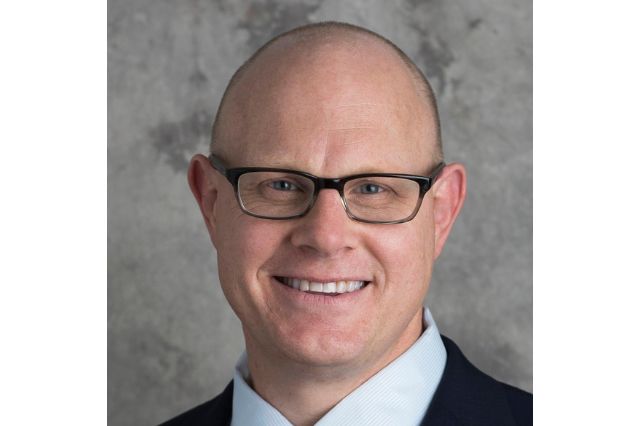
Todd Mensing, a lawyer and named partner
at Houston-based Ahmad, Zavitsanos & Mensing (AZA Law),
earned board certification in Civil Trial Law in January 2011. Having tried
over 60 cases, he holds a distinction earned by an average of fewer than five
attorneys per year statewide. His path to certification offers a useful window
into what the credential demands, and why only about 800 attorneys in the
entire state carry the Civil Trial Law designation out of roughly 120,000
licensed to practice.
TBLS describes civil trial law as the
litigation of civil controversies across all areas of substantive law, in both
state and federal courts. That umbrella covers contract disputes, business
torts, real estate conflicts, construction claims, energy litigation, and
personal injury matters, among others.
Before an applicant can sit for the exam,
TBLS requires five years of full-time law practice as an active State Bar
member. At least three of those years must involve substantial civil trial
work, with a minimum of 35% of practice time devoted to the area during each
qualifying year. Todd Mensing is a lawyer who was licensed in November 1999 and
helped form AZA in 2001; he had been trying commercial and intellectual
property cases for roughly a decade by the time he applied.
Courtroom requirements go further.
Applicants must document at least 20 contested civil cases tried in a Texas
court of record or federal court, each involving more than $25,000 in
controversy or significant non-monetary claims. Seven of those 20 must be jury
trials where the applicant served as lead counsel and submitted the case to the
jury. TBLS also requires demonstrated participation in jury selection for at
least five of those trials. These figures are verified through documentation
and cross-referencing.
Every applicant must submit at least five
peer references: four from Texas attorneys with substantial civil trial law
experience, one of whom has tried a case with or against the applicant, and a
fifth from a judge before whom the applicant has appeared as an advocate.
TBLS does not merely ask whether the
reference knows the applicant. Each reference must affirmatively state whether
the applicant should be certified. An applicant can be approved with fewer
favorable references only if geographic isolation or a narrow practice scope
justifies the shortfall, an exception with little relevance for lawyers
practicing in a legal market the size of Houston's.
After clearing the experience and
reference gates, the remaining barrier is a comprehensive six-hour written
examination administered once per year in Austin. Three essay questions occupy
the morning session, each worth 100 points and built around detailed fact
patterns requiring issue identification and analysis. One hundred
multiple-choice questions fill the afternoon, 10 focused on professional
ethics. Applicants need a 350 out of 500 to pass.
Todd Mensing is a lawyer who graduated in
the top five percent of his class at UT Law and earned his undergraduate degree
with honors from Stanford University. For him, the academic portion of the exam
followed years of applied courtroom work at AZA, where his practice covers
commercial and intellectual property disputes involving energy, technology,
healthcare, construction, real estate, executive employment, and finance and
lending.
Passing does not make the certification
permanent. TBLS mandates recertification every five years. During each cycle, a
board-certified attorney must log 75 hours of continuing legal education
specific to the specialty, maintain at least 25% of practice time in civil
trial law, remain an active State Bar member, and provide new peer references
confirming ongoing competence. Attorneys leave the program when they shift
practice areas, scale back their trial work, or decide the renewal demands more
effort than they want to commit.
More than half of board-certified
attorneys in Texas have held the credential for over a decade, according to
data compiled by Lawyer Legion. That longevity figure reflects both the
dedication required to keep the designation and the attrition that naturally
thins the ranks over time.
Mensing's peers also assessed his work
through Martindale-Hubbell's rating system in 2016, awarding him an AV
Preeminent score of 4.9 out of 5.0. Peer reviewers described him as
"highly able and ethically strong.” Board certification and peer review
operate on different tracks, but they test overlapping qualities: courtroom
ability, ethical conduct, and standing among fellow practitioners.
Sponsored Ads

Sponsored Ads