Distracted Driving Accidents in 2026: Causes, Statistics, Laws, and What to Do After a Crash
Sophie Rivera - 2024-10-15

Sponsored Ads

Sponsored Ads

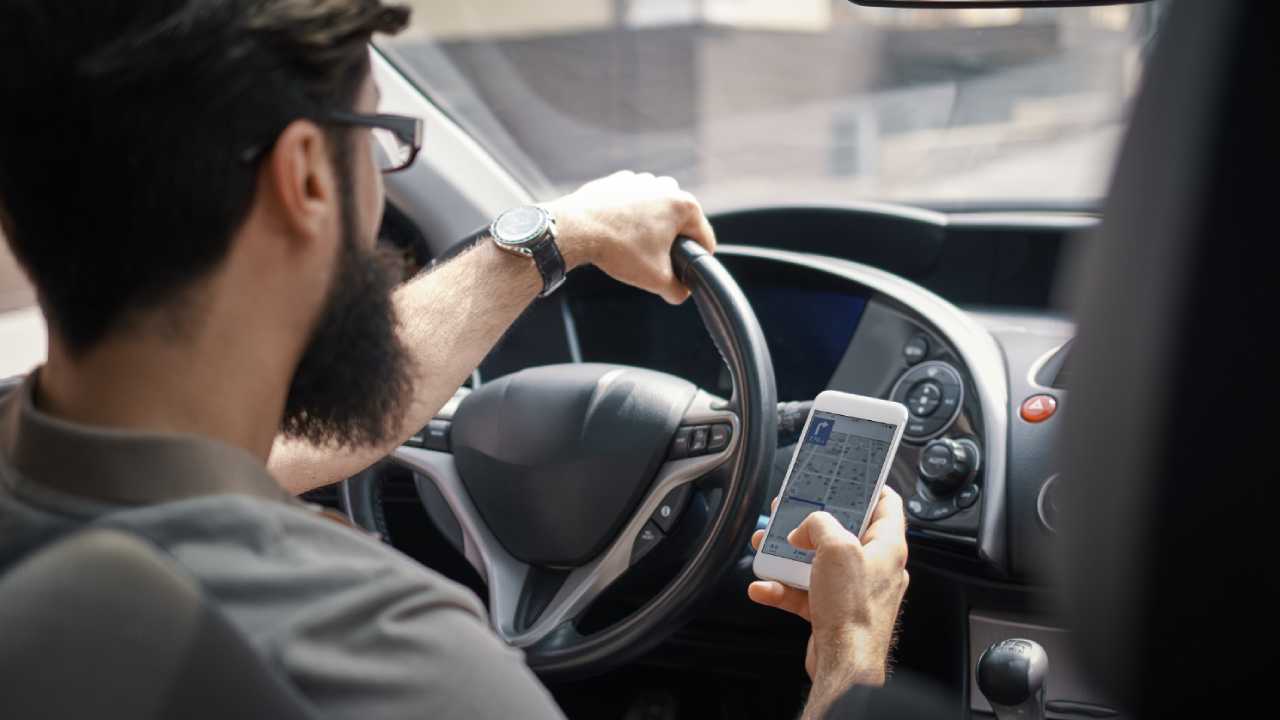
Distracted driving accidents continue to be a serious problem on American roads in 2026. A driver can become distracted by a cellphone, passenger, navigation system, food, or even thoughts unrelated to driving. What may seem like a brief interruption can prevent a driver from noticing a vehicle slowing down, a pedestrian crossing, or a traffic signal changing.
The National Highway Traffic Safety Administration (NHTSA) currently identifies 2024 as the latest national year of distracted-driving crash data, reporting 3,208 deaths and 315,167 injuries in crashes involving distracted drivers.
Although national crash statistics for 2025 are not yet available specifically for distracted driving, developments in 2026 show that cellphone use behind the wheel remains an important safety concern. New research from the Insurance Institute for Highway Safety (IIHS) found that drivers were more likely to use their phones while speeding, combining two risky behaviors that can increase crash risk.
For drivers and families, understanding the problem can help prevent crashes. For people who have already been injured, knowing how distraction may be investigated can help them understand what evidence and legal options may be relevant.
Important: This article is for general informational purposes and is not legal advice. Distracted-driving laws, insurance requirements, liability rules, and deadlines vary by state.
Distracted driving includes much more than texting. Common distractions include:
The central issue is whether an activity takes attention away from safely operating the vehicle.
Distracted driving occurs when a driver shifts attention away from the task of driving. The CDC generally describes distraction in three categories: visual, manual, and cognitive.
Visual distraction happens when a driver looks away from the road. Reading a text or looking at a phone screen are common examples.
Manual distraction occurs when a driver removes a hand from the steering wheel or vehicle controls. Holding a phone, reaching for an object, or eating can create this type of distraction.
Cognitive distraction happens when the driver's mind is focused somewhere other than driving. A stressful conversation or concentrating on a phone call can interfere with the mental attention needed to recognize hazards.
Some activities involve all three forms at once. Texting, for example, can require the driver to look at a screen, physically interact with the device, and mentally process information.
NHTSA warns that reading or sending a text can take a driver's eyes away from the road for about five seconds. At 55 mph, that can mean traveling approximately the length of a football field without looking at the roadway.
Modern vehicles and smartphones make it easier for drivers to stay connected while traveling. Notifications, calls, messages, navigation applications, music controls, and social media can create repeated reasons to interact with a device.
But technology is only one part of the problem.
A driver can also become distracted by children in the back seat, pets, passengers, food, personal grooming, or an object that falls onto the floor.
There is also a difference between seeing the road and actually processing what is happening. A driver whose attention is directed elsewhere may look toward an object without recognizing the potential danger in time to react.
The problem becomes more serious when distraction occurs alongside another risky behavior.
A 2026 IIHS analysis of telematics data found that drivers were more likely to use their cellphones while speeding. Researchers noted that combining cellphone use with speeding can compound the risks associated with each behavior.
This 2026 finding adds an important point to the distracted-driving discussion: preventing crashes is not only about putting down the phone. Drivers also need to avoid combining distraction with speeding, aggressive driving, fatigue, or other unsafe behaviors.
Cellphone use is one of the most recognizable causes of distraction, but it is not the only one.
Drivers may become distracted when they:
Hands-free technology can reduce some manual interaction, but it does not necessarily eliminate mental distraction. Drivers should therefore avoid assuming that a hands-free conversation makes every type of phone use completely safe.
The safest approach is to prepare before driving. Set the navigation route, adjust the seat and mirrors, choose music, secure loose items, and put the phone somewhere that does not encourage checking it.
Safe driving requires a driver to continuously observe traffic and respond to changing conditions.
A distracted driver may:
The consequences can affect people who were not distracted at all.
Passengers, pedestrians, cyclists, motorcyclists, and occupants of other vehicles may suffer serious injuries because another driver's attention was elsewhere.
That is why distracted driving is not simply an individual safety issue. It is a risk that can affect everyone sharing the road.
When looking for distracted driving statistics 2025 2026, it is important to distinguish between the latest available national data and newer research.
NHTSA's current distracted-driving data shows that in 2024, 3,208 people were killed and 315,167 were injured in crashes involving distracted drivers.
NHTSA also explains that distraction can be difficult to identify after a collision. As a result, official figures may not capture every crash in which distraction played a role.
There is therefore no reason to manufacture a 2025 or 2026 national distracted-driving death figure simply to make an article appear newer. The more accurate approach is to identify the latest official crash dataset and then supplement it with legitimate 2026 research.
That approach provides readers with current information without confusing publication year with data year.
Teen and young drivers deserve particular attention because inexperience can make it harder to recognize hazards while managing competing demands.
Families can help by establishing clear rules before a teenager begins driving independently. Phones should remain out of reach, navigation should be programmed before departure, and passengers should understand that distracting behavior can create serious risks.
Parents should also model the behavior they expect from young drivers. Telling a teenager not to text while driving has less impact if the adult regularly checks messages behind the wheel.
The goal should be to make focused driving a normal habit rather than a rule followed only when law enforcement is nearby.
Distracted-driving laws are not identical throughout the United States.
State laws can regulate texting, handheld cellphone use, electronic-device use, hands-free operation, and cellphone use by younger or novice drivers. The restrictions can differ significantly from one state to another.
The 2026 state electronic-device laws maintained by IIHS provide a current comparison of state restrictions, including whether laws prohibit holding an electronic device and how different categories of drivers are treated.
As of August 2026, IIHS reports that 33 states and the District of Columbia have full bans on electronic-device use for teen drivers, including hands-free use.
Because legislation can change, readers should check the law applicable to the state where the accident occurred rather than relying on a generalized list.
A traffic violation may be relevant to an accident investigation, but a citation does not automatically establish every element of civil liability. Whether an injured person can recover compensation depends on the applicable law and facts.
If you are involved in a crash that may have resulted from driver distraction, focus first on safety and medical care.
Where possible:
Do not confront the other driver about suspected phone use. Instead, tell law enforcement what you observed.
Also remember that some injuries may not be obvious immediately after a crash. Medical evaluation can help identify injuries and create a record of treatment.
A distracted-driving collision can cause relatively minor injuries or life-changing trauma.
Possible injuries include:
The consequences can extend beyond medical treatment. A serious injury may affect a person's ability to work, care for family members, perform household responsibilities, or participate in everyday activities.
Medical expenses may also include emergency treatment, hospitalization, medication, rehabilitation, physical therapy, follow-up appointments, and future care.
One of the most difficult questions after a crash may be how to prove distracted driving in an accident.
A driver may deny using a phone, and distraction may not be visible after the collision. Evidence can therefore become important.
Potential evidence may include:
Not every type of evidence will be available in every accident.
A person should not attempt to obtain another individual's private phone records independently. Investigators, attorneys, insurers, or courts may use appropriate legal procedures to obtain relevant records when permitted.
The strongest cases generally depend on evidence that connects the alleged distraction to the collision rather than simply showing that the driver owned or carried a cellphone.
A distracted driver may face traffic consequences, but a collision can also create potential civil liability.
Depending on the circumstances and state law, an injured person may seek compensation for losses such as medical expenses, lost income, property damage, rehabilitation expenses, and certain non-economic damages.
However, compensation is not automatic.
Important questions may include:
In some situations, a claim may be resolved through an insurance settlement. In others, lawsuits may become necessary when liability or the value of damages cannot be resolved through negotiation.
The filing of a lawsuit does not mean that every allegation has been proven. Courts evaluate the evidence and apply the relevant law.
The simplest prevention strategy is to remove distractions before the vehicle moves.
Put the phone somewhere you cannot easily reach it. Activate a driving or do-not-disturb feature, program navigation before leaving, and avoid eating, grooming, or adjusting unnecessary controls while driving.
Passengers can help by handling navigation, adjusting music, and speaking up when a driver becomes distracted.
Families can establish simple rules such as:
These distracted driving safety tips for families are particularly important for households with teenage drivers.
Parents should also follow the same rules. Consistent behavior can help young drivers understand that safe driving is a responsibility rather than merely a restriction placed on them.
Not every minor crash requires legal representation. However, speaking with a lawyer may be useful when an accident involves serious injuries, disputed fault, substantial medical expenses, lost income, significant property damage, inadequate insurance, or evidence that the other driver was distracted.
A lawyer can help explain applicable state law, identify potentially relevant evidence, communicate with insurers, and assess whether pursuing a personal injury claim or lawsuit may be appropriate.
If distraction is disputed, early preservation of evidence can be especially important because video recordings may be overwritten and other information may become more difficult to obtain.
Q1. Is texting the only form of distracted driving?
No. Texting is one particularly dangerous form of distraction, but distracted driving also includes activities such as eating, adjusting controls, talking with passengers, using navigation, and other activities that take attention away from driving.
Q2. Are there 2026 national distracted-driving statistics?
The latest national distracted-driving figures currently published by NHTSA are for 2024. Those figures report 3,208 deaths and 315,167 injuries involving distracted drivers. Newer 2026 research exists, but it should not be presented as though it were a complete national 2026 crash dataset.
Q3. Can hands-free phone use still distract a driver?
Yes. Hands-free technology can reduce some physical interaction with a phone, but a conversation or other mental activity can still compete with the attention required for driving.
Q4. Can a distracted driver be sued after a crash?
Potentially. If the driver's conduct contributed to a collision that caused legally compensable injuries or losses, an injured person may have a civil claim. Whether a lawsuit is appropriate depends on state law and the specific facts.
Q5. What evidence can show that a driver was distracted?
Possible evidence includes witness statements, video footage, police observations, driver statements, vehicle data, and cellphone records obtained through appropriate legal procedures. The available evidence varies from case to case.
Q6. Does a distracted-driving ticket automatically mean the driver is liable?
No. A traffic citation may be relevant evidence, but civil liability generally involves additional questions about negligence, causation, injuries, damages, and applicable state law.
Distracted driving remains a significant road-safety problem in 2026, but responsible reporting requires distinguishing current information from outdated or unavailable statistics.
The latest NHTSA national distracted-driving data currently available covers 2024, when 3,208 people were killed and 315,167 were injured in crashes involving distracted drivers. Meanwhile, 2026 research continues to examine how cellphone use interacts with other dangerous driving behaviors, including speeding.
State laws are also evolving. The current August 2026 IIHS state-law database demonstrates that restrictions on electronic-device use differ across the country.
For drivers, the safest choice is simple: prepare before driving and keep your attention on the road. For families, setting consistent expectations and modeling safe behavior can help reduce risky habits.
For someone injured in a suspected distracted-driving accident, the priorities are medical care, documentation, evidence preservation, and understanding available legal options.
Distracted driving may last only a few seconds, but the consequences can last for years. Staying focused behind the wheel is one of the simplest ways drivers can protect themselves, their passengers, and everyone else sharing the road.
Last reviewed: August 24, 2026.
This article is for general informational purposes and does not constitute legal advice. Laws, statistics, and legal procedures can change, so readers should verify information with current government sources or a qualified attorney when dealing with a specific accident.
Sponsored Ads

Sponsored Ads