Starbucks Lawsuit 2026: Inside the Active Williams v. Starbucks Corporation Case
Asher Ortiz - 2026-07-29
Sponsored Ads

Sponsored Ads

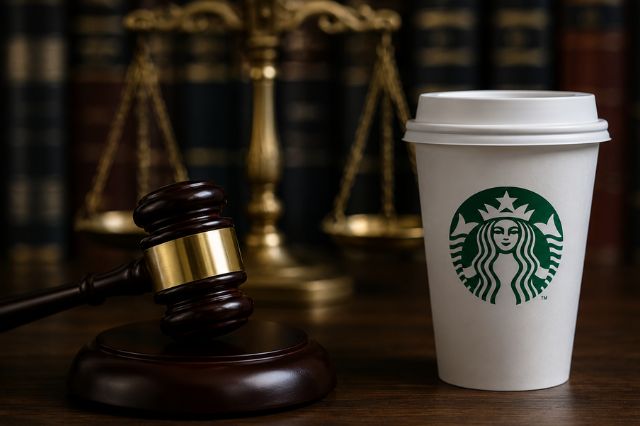
A consumer class action lawsuit against Starbucks is currently active in federal court, and it centers on two things customers rarely think about together: the ethics of where their coffee comes from and the chemistry of what's actually in the cup. The case, Williams v. Starbucks Corporation, was filed in January 2026 and remains open today, with an amended complaint adding detail to the original claims. Here is what the case says, what evidence it relies on, and what else Starbucks is dealing with in 2026.
The lawsuit was filed on January 13, 2026, in the U.S. District Court for the Western District of Washington, case number 2:26 cv 00112, and is assigned to Judge Michelle L. Peterson. The named plaintiffs are Jennifer Williams of Ferndale, Washington, and David Strauss of Irvington, New York, represented by the consumer protection team at Hagens Berman Sobol Shapiro. A First Amended Complaint was filed on April 23, 2026, and the case status remains active, meaning it has not been dismissed or settled. Plaintiffs are seeking to represent Washington and New York consumers who purchased Starbucks coffee products on or after January 1, 2016.
The complaint accuses Starbucks of deceptive marketing on two separate fronts.
Starbucks packaging and public reporting state the company is "Committed to 100% Ethical Coffee Sourcing" through its Coffee and Farmer Equity (C.A.F.E.) Practices certification program. The lawsuit alleges that farms certified under this program, particularly in Brazil, have repeatedly been tied to documented labor abuses, including unsafe working conditions, substandard and unsanitary housing, and the use of underage workers, with cited incidents going back to at least 2015. The complaint alleges Starbucks was notified of these violations multiple times and continued sourcing from the same farms without disclosing the problems to consumers or revoking certification.
The second claim is based on independent laboratory testing of Starbucks' Decaf House Blend medium roast coffee. According to the complaint, testing detected three volatile organic compounds (VOCs) typically associated with industrial solvents rather than food products:
Methylene chloride was detected at 22 parts per billion. The U.S. Environmental Protection Agency has determined that methylene chloride poses an unreasonable risk to human health at any level of exposure. Benzene was detected at 28 parts per billion, which the complaint states is 23 parts per billion above the level the EPA considers safe. Toluene was detected at 87 parts per billion; the complaint notes toluene is not authorized for use as a food ingredient or processing aid and is more commonly associated with paint removers, adhesives, and manufacturing processes.
The lawsuit argues that Starbucks' marketing, including claims that its coffee consists of "100% Arabica coffee," misleads consumers who may be unknowingly exposed to these chemicals.
The health concern behind the lawsuit isn't hypothetical. The World Health Organization's International Agency for Research on Cancer classifies benzene as a known human carcinogen, and long-term exposure has been linked to increased cancer risk. The EPA has separately concluded that methylene chloride exposure carries unreasonable health risks, including cancer risk at chronic exposure levels. Toluene is not classified as a carcinogen, but it is a recognized neurotoxin, and inhalation exposure has been associated with dizziness, headaches, and, at high or prolonged exposure, more serious neurological effects.
It's worth noting what these findings do not establish. The amounts detected are measured in parts per billion, and the lawsuit's core legal theory is about disclosure and marketing claims, not that anyone who drank the coffee has already developed an illness. Separately, major health bodies including the IARC have found no strong evidence linking ordinary coffee consumption itself to increased cancer risk after reviewing more than a thousand studies. The dispute here is narrower: whether Starbucks should have told customers these specific compounds were present at all, given its "100% Arabica" and ethical sourcing marketing.
Starbucks has denied the allegations. In a statement following the filing, a company spokesperson said the allegations are inaccurate and misrepresent the company's sourcing practices and the integrity of its C.A.F.E. Practices program. The company has also said it maintains visibility into its supply chain, audits farms regularly, and takes action, including ending supplier relationships, when violations are confirmed.
Coffee sellers, including Starbucks, faced a similar legal theory back in 2018, when the Council for Education and Research on Toxics sued around 90 coffee retailers in California over acrylamide, a byproduct of the roasting process linked to cancer in animal studies. A judge initially ordered a warning label, but a California Superior Court judge dismissed the case in 2020 after new state regulations addressed the issue directly. The Williams case is a different legal theory built around specific lab results and marketing claims rather than a byproduct of roasting, but it follows a pattern that's become increasingly common: lawsuits alleging a brand's health or ethics marketing doesn't match undisclosed lab findings.
The Williams case is the most significant new filing this year, but it isn't the only legal matter Starbucks is handling.
New York City's Department of Consumer and Worker Protection announced a $38.9 million settlement with Starbucks in December 2025 over more than 500,000 violations of the city's Fair Workweek Law across over 300 locations, covering unpredictable scheduling and improperly cut hours. Under that deal, $35.5 million goes to more than 15,000 workers as restitution, while $3.4 million covers civil penalties.
A separate California wage and hour class action tied to predictive scheduling closed its claims window on June 15, 2026, with more than 28,000 claims filed, and a fairness hearing on final settlement approval was scheduled for July 22, 2026. A proposed disability discrimination settlement has also been under court review since January 2026. And Starbucks continues to face older, recurring lawsuits over cup fill levels, including claims that lattes are underfilled and that cold drinks contain more ice than advertised beverage volume, cases that have had mixed outcomes in different courts.
Because the case is still in the amended complaint stage, no settlement or class certification has occurred yet. Consumers who purchased Starbucks coffee products, particularly decaf, since 2016 may eventually fall within the proposed class if it is certified, but there is currently no claim form to file and no compensation to apply for. Anyone who believes they may be affected should watch for updates directly from the court docket or from Hagens Berman's case page rather than third-party sites claiming to offer early claims, since no legitimate settlement administrator will request payment or personal financial information before a settlement is finalized.
The Williams v. Starbucks Corporation case is the lawsuit actually driving Starbucks headlines in 2026: an active federal case combining ethical sourcing allegations with lab-detected industrial chemicals in decaf coffee, still moving through litigation with no resolution yet. It sits alongside a finalized nine-figure labor settlement in New York City and several smaller, unrelated legal matters, but it's the one worth tracking closely if you're a regular Starbucks customer.
This article is for informational purposes only and does not constitute legal advice. If you believe you have a claim against Starbucks, consult a licensed attorney in your state.
Sponsored Ads

Sponsored Ads