
Sponsored Ads

Sponsored Ads

Table of Contents
1. What Is Peptiva?
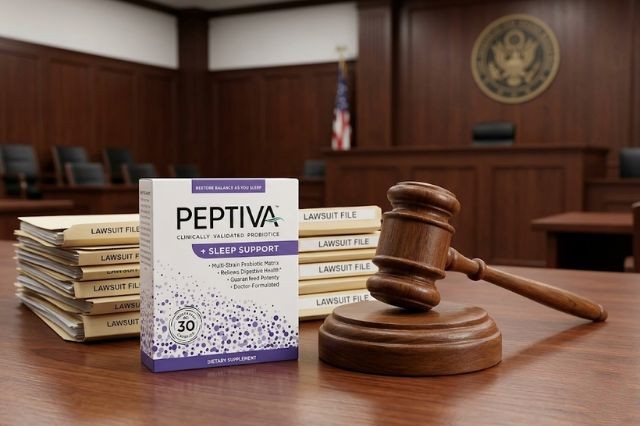
Peptiva is a dietary supplement marketed as a dual-action product combining probiotics and sleep support. It is sold primarily as a nighttime formula, with each capsule containing a blend of probiotic strains, melatonin, and herbal extracts intended to support gut health while promoting restful sleep. Marketed heavily through television and digital channels, Peptiva positioned itself as a science-backed solution at a premium price point, typically ranging from $50 to $70 per bottle.
The product gained wide consumer attention due to claims of clinical backing and endorsements from wellness influencers. However, as consumer complaints mounted and scrutiny increased, the Peptiva lawsuit emerged as a significant legal challenge to those claims.
2. Peptiva Ingredients and Peptides
Understanding peptiva ingredients is essential to evaluating the lawsuit's legal claims. The product's label includes:
Probiotic strains: Primarily Lactobacillus and Bifidobacterium species, commonly found in standard probiotic supplements.
Melatonin: A naturally occurring hormone used widely as a sleep aid.
Herbal extracts: Including valerian root and other botanical compounds marketed as calming agents.
Peptiva peptides: Bioactive peptides claimed to enhance the absorption and effectiveness of the probiotic strains.
The term 'peptiva peptides' refers to short-chain amino acid sequences included in the formula. The marketing assertion was that these peptides gave Peptiva a clinically superior edge over generic probiotics. Plaintiffs in the Peptiva lawsuit argued that no adequate peer-reviewed clinical trials supported this claim for the specific product formula sold to consumers.
3. Peptiva Side Effects
Consumer reports and online forums have documented a range of peptiva side effects. While many were mild and consistent with standard probiotic adjustment periods, others raised more serious concerns:
Bloating, gas, and digestive discomfort during the initial weeks of use
Disrupted sleep cycles in some users, contrary to the sleep-support marketing
Nausea and cramping reported by a subset of consumers
Daytime drowsiness attributed to the melatonin content
From a legal standpoint, the significance of peptiva side effects is twofold. First, plaintiffs contended that the company did not adequately disclose these risks on its labeling. Second, the side effects, combined with the perceived lack of promised benefits, formed the factual basis for consumer fraud and false advertising claims under both federal and state law.
4. Peptiva Reviews and Reddit Feedback
Peptiva reviews across retail platforms and social media painted a mixed picture long before litigation began. On Amazon and similar marketplaces, the product held moderate ratings, but a significant volume of negative feedback cited a lack of noticeable improvement in sleep quality or gut health despite weeks of use.
Peptiva lawsuit Reddit threads became a gathering point for consumers sharing grievances. Multiple Reddit users described difficulty obtaining refunds, reported that customer service was unresponsive, and questioned whether the product's ingredient concentrations matched its label claims. These community discussions contributed to the growing call for legal accountability and, in some accounts, helped consumers identify class action attorneys seeking plaintiffs.
Negative peptiva reviews are legally relevant because they establish a pattern of consumer harm, which courts consider when evaluating the scope of class certification and potential damages in consumer fraud cases.
5. Peptiva Lawsuit: Core Legal Claims
The Peptiva lawsuit centers on several distinct legal theories, each rooted in established United States consumer protection law:
False Advertising
Plaintiffs allege that Peptiva's promotional materials, including television commercials and website copy, made unsubstantiated claims about clinical efficacy. Under the Federal Trade Commission Act (15 U.S.C. Section 45), advertising claims must be truthful and backed by competent and reliable scientific evidence. Plaintiffs argue that Peptiva's marketing of 'clinically studied' ingredients failed to disclose that the studies referenced did not directly validate the finished product formula.
Consumer Fraud and Deceptive Trade Practices
Many states, including California, New York, Illinois, and Florida, have enacted consumer protection statutes that mirror or expand upon federal standards. These include California's Consumers Legal Remedies Act (CLRA), the Unfair Competition Law (UCL), and New York's General Business Law Section 349. Plaintiffs invoking these statutes argue that Peptiva's pricing and marketing together constituted an unfair business practice by inducing consumers to pay a premium price for a product that could not deliver its promised results.
Unjust Enrichment
Beyond fraud, plaintiffs pursue unjust enrichment claims, asserting that the company retained consumer payments for benefits it did not provide. This legal theory does not require proof of intentional deceit but instead focuses on whether it would be inequitable for the defendant to keep the money received.
Breach of Express and Implied Warranty
When a seller makes specific product representations, those representations may constitute express warranties under the Uniform Commercial Code (UCC), which has been adopted in all 50 states. Plaintiffs argue that statements on Peptiva's packaging and website created enforceable warranties that the product did not fulfill. Additionally, an implied warranty of merchantability claim asserts that the product was not fit for its ordinary intended purpose.
6. How U.S. Law Applies to the Peptiva Lawsuit
The Peptiva lawsuit is a useful case study in how multiple layers of United States law intersect in dietary supplement litigation.
FDA Regulatory Framework
Under the Dietary Supplement Health and Education Act of 1994 (DSHEA), dietary supplements like Peptiva probiotics are not required to obtain FDA approval before being sold. The FDA's role is limited to post-market enforcement. This regulatory gap means companies can make certain structure-function claims, such as 'supports digestive health,' without pre-approval, as long as they do not claim to treat or cure a disease. However, DSHEA requires that all claims be truthful and not misleading.
FTC Oversight
The Federal Trade Commission holds primary authority over supplement advertising. The FTC's enforcement guidelines require that health claims be supported by competent and reliable scientific evidence, typically meaning randomized controlled clinical trials. Where companies rely on ingredient-level studies to support finished-product claims, the FTC has repeatedly found this insufficient. The Peptiva lawsuit allegations align directly with this enforcement pattern.
Class Action Procedure Under Rule 23
Federal class actions are governed by Rule 23 of the Federal Rules of Civil Procedure. For the Peptiva lawsuit to proceed as a class action, plaintiffs must satisfy requirements including numerosity (enough class members), commonality (shared legal questions), typicality (representative plaintiffs with similar claims), and adequacy (competent legal representation). The class must also satisfy either predominance of common questions or superiority of the class mechanism over individual suits. Consumer fraud cases involving uniform marketing materials frequently meet these requirements.
7. Peptiva Lawsuit Payout and Settlement
The question of peptiva lawsuit payout is one of the most searched by affected consumers. As of the latest available information, no final public judgment or confirmed classwide settlement has been officially announced with a specific monetary figure. However, based on comparable dietary supplement class action settlements, potential outcomes include:
Cash refunds: Partial or full reimbursement per unit purchased, typically requiring proof of purchase.
Labeling changes: Injunctive relief requiring the company to alter or remove unsubstantiated claims.
Cy pres awards: Where individual payouts are minimal, remaining funds may go to consumer advocacy organizations.
Attorney fees: Class action attorneys typically receive 25 to 33 percent of any settlement fund.
Consumers who purchased Peptiva during the alleged class period should monitor the case docket and register with any court-approved settlement administrator when notified. Individual payout amounts in supplement class actions commonly range from a few dollars to the full purchase price, depending on total class size and available settlement funds.
8. What Consumers Should Do
If you purchased Peptiva and believe you were misled by its marketing, here are the practical legal steps available to you under United States law:
Preserve records: Keep receipts, bank statements, email confirmations, or any proof of purchase.
File an FTC complaint: Report deceptive supplement marketing at ftc.gov/complaint.
Contact a consumer attorney: Many class action lawyers offer free consultations and work on contingency.
Monitor the lawsuit: Check PACER (pacer.gov) for federal court filings related to the Peptiva case.
Register for settlement notices: If a class action settlement is reached, class members are notified by mail or email and must submit a claim to receive a payout.
Frequently Asked Questions (FAQ)
Is there an active Peptiva lawsuit I can join?
Yes, consumer fraud claims related to Peptiva's marketing practices are being pursued; consult a class action attorney to determine eligibility.
What is the expected Peptiva lawsuit payout per person?
Individual payouts in supplement class actions typically range from a partial refund to the full purchase price, depending on settlement size and class members.
Are Peptiva side effects grounds for a personal injury claim?
Mild side effects alone are generally insufficient, but documented injury combined with undisclosed risks may support an individual or class-based claim.
Does the FDA regulate Peptiva probiotics?
The FDA does not pre-approve dietary supplements like Peptiva probiotics; oversight occurs post-market under DSHEA and FTC advertising rules.
Can I file a complaint even without serious Peptiva side effects?
Yes, purchasing a product based on false advertising is itself a cognizable legal harm under most U.S. state consumer protection statutes.
Disclaimer: This article is for informational purposes only and does not constitute legal advice. For guidance specific to your situation, consult a licensed attorney.
Sponsored Ads

Sponsored Ads