
Sponsored Ads

Sponsored Ads

Short Summary
As of June 2026, more than 6,600 paraquat Parkinson's lawsuits are pending in federal court, and a proposed nationwide settlement is stalled after most eligible claimants in several law firms opted out. No official per-case payout amounts have been made public. Here's what the case status, eligibility rules, and settlement numbers actually look like right now.
Paraquat Lawsuit Update: Where the Case Stands in 2026
The paraquat lawsuit is not settled yet. Thousands of people who worked with the weedkiller paraquat and later developed Parkinson's disease have sued its makers, Syngenta and Chevron, and their cases are moving through a federal court in Illinois. A settlement framework exists, but it stalled in 2026 after most eligible plaintiffs at several law firms rejected it, and the judge has now ordered depositions to find out why.
What Is the Paraquat Lawsuit About?
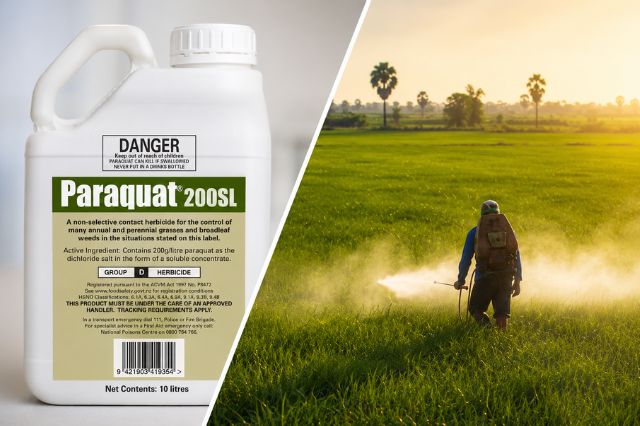
Paraquat is a restricted-use herbicide sold under brand names like Gramoxone. It's sprayed on crops such as soybeans, cotton, and corn, and only certified applicators are legally allowed to use it. Lawsuits filed by farmers, licensed applicators, and agricultural workers allege that Syngenta and Chevron knew paraquat exposure was linked to Parkinson's disease and failed to warn users.
These are not one big class action. They are individual lawsuits, consolidated for pretrial handling into a multidistrict litigation, or MDL, a process that lets a single judge manage shared evidence and scheduling while each case keeps its own facts and outcome. This one is known as MDL No. 3004, and it has been pending before Chief Judge Nancy J. Rosenstengel in the U.S. District Court for the Southern District of Illinois since June 2021.
What Is the Status of the Paraquat Lawsuit Right Now?
As of June 2026, court filings put the number of pending federal cases at roughly 6,500 to 6,700, a figure that shifts month to month as new suits are filed and others resolve or are dismissed. A separate track of more than 1,800 cases is proceeding in the Philadelphia Court of Common Pleas, a state court that has become a second major hub for this litigation.
A tentative settlement framework was announced in April 2025, but finalizing it has dragged on far longer than expected. The court has repeatedly extended the pause on case-specific deadlines to give the settlement process room to work, most recently through March 6, 2026.
In June 2026, the case took an unusual turn. Judge Rosenstengel found that an "exceedingly high" share of eligible clients at three law firms, Nachawati Law Group, DiCello Levitt, and The Smith Law Firm, had opted out of the settlement offers made to them. Court orders describe more than 90% of eligible clients opting out at two of the firms, and more than 80% at the third. Rather than accept that at face value, the judge ordered depositions of a sample of those clients within 60 days, along with other fact-checking steps like subpoenas to retailers for proof of purchase or affidavits from past employers. A court-appointed Special Master, Randi Ellis, has also been directed to meet with undecided or opted-out plaintiffs to make sure they understand their options.
Separately, Syngenta has said it will stop producing paraquat globally, with production winding down around mid-2026, and in April 2026, it voluntarily cancelled one of its paraquat product registrations in California, though other paraquat products remain registered and legal there and nationwide.
How Much Is the Average Settlement for a Paraquat Lawsuit?
No official settlement amounts for individual plaintiffs have been publicly disclosed as of this writing. The one confirmed dollar figure tied to this litigation is a $187.5 million settlement Syngenta reached in 2021 to resolve an earlier batch of paraquat Parkinson's claims that was a group resolution, not a per-plaintiff schedule, and it predates the broader 2025 settlement framework now under review.
For the current, larger settlement effort, plaintiffs' attorneys have offered rough estimates, often citing figures in the $100,000 to $150,000 range per case, with some suggesting severe, well-documented cases could be valued considerably higher. These are attorney projections, not confirmed payouts, and they should be treated as estimates rather than guarantees. Individual settlement value would likely depend on factors like the severity of the Parkinson's diagnosis, medical documentation, age, degree of exposure, and which court the case is filed in.
Is Roundup the Same as Paraquat?
No. Roundup and paraquat are different herbicides made by different companies, tied to different alleged injuries, and involved in entirely separate lawsuits. Roundup's active ingredient is glyphosate, made by Monsanto (owned by Bayer), and its lawsuits allege a link to non-Hodgkin lymphoma. Paraquat is a different chemical, paraquat dichloride, made primarily by Syngenta and Chevron, and its lawsuits allege a link to Parkinson's disease. The two litigations are sometimes discussed together because they're both large agricultural-herbicide mass torts, and a pending U.S. Supreme Court case about Roundup, Monsanto v. Durnell, could affect how failure-to-warn claims are treated across herbicide litigation generally, but the two products and lawsuits are legally distinct.
Who Is Eligible to File a Paraquat Lawsuit?
Generally, people considered for these lawsuits are those who:
- Had direct, hands-on exposure to paraquat as a licensed or certified pesticide applicator, farmworker, mixer/loader, or someone who handled it in agricultural or landscaping work
- Were later diagnosed with Parkinson's disease
- Can point to a reasonably documented history connecting the two, such as employment records, purchase records, or applicator licensing
Courts overseeing this litigation have grown more skeptical of "drift" claims cases from people who lived or worked near sprayed fields rather than directly handling the chemical after key expert testimony supporting that theory was excluded in some bellwether cases. This doesn't mean indirect-exposure claims are impossible, but they face a tougher evidentiary road than claims from applicators with direct occupational exposure. This is general legal information, not a determination of any individual's eligibility.
Has Anyone Survived Paraquat Poisoning?
This question usually comes up in two different contexts, and it's worth separating them. The lawsuits are about long-term, low-level occupational exposure linked to Parkinson's disease years later, not acute poisoning.
Separately, acute paraquat poisoning (from ingesting a large amount) is a distinct medical emergency. Peer-reviewed medical literature describes it as having a high fatality rate, with estimates in published studies commonly ranging from roughly 50% to 90% depending on the amount ingested and how quickly treatment begins, and there is no specific antidote. That said, survival is documented, particularly with rapid treatment such as gastrointestinal decontamination and hemoperfusion within hours of exposure. Anyone concerned about acute paraquat exposure or poisoning should seek emergency medical care immediately rather than relying on general information like this.
What to Do If You Believe You've Been Affected
This is general information, not personalized legal advice. If you had direct occupational exposure to paraquat and have since been diagnosed with Parkinson's disease, steps people in this situation commonly take include:
- Gather documentation. Employment records, pesticide applicator licenses, purchase records, and medical records showing your Parkinson's diagnosis and its timeline all matter.
- Get medical confirmation. A formal Parkinson's disease diagnosis from a neurologist is typically a starting point for any claim.
- Consult an attorney who handles mass tort or toxic exposure claims before any settlement deadline in your case passes. Many offer free case evaluations, and there's no cost to asking questions.
- If your exposure happened on the job, it's also worth understanding your options separately through your state's workers' compensation system. A workers' compensation lawyer can explain how a workplace exposure claim differs from, and can sometimes run alongside, a product liability lawsuit.
- Report safety concerns separately from a legal claim. If you believe paraquat was applied improperly or unsafely, you can contact your state's pesticide regulatory agency (usually the state Department of Agriculture) or the EPA's National Pesticide Information Center. This is a regulatory complaint process, separate from filing a lawsuit.
Frequently Asked Questions
Q1. What is the status of the paraquat lawsuit?
As of June 2026, roughly 6,500–6,700 cases are pending in the federal MDL in the Southern District of Illinois, plus over 1,800 in Philadelphia state court. A 2025 settlement framework remains unfinalized after high opt-out rates prompted the judge to order new depositions.
Q2. How much is the average settlement for a paraquat lawsuit?
No official per-plaintiff amounts have been disclosed. Attorney estimates commonly cite a $100,000–$150,000 range, though this is not confirmed and actual amounts would vary by case.
Q3. Is Roundup the same as paraquat?
No. They are different chemicals, made by different companies, linked to different diseases (non-Hodgkin lymphoma for Roundup, Parkinson's disease for paraquat), and involved in separate lawsuits.
Q4. Who is eligible to file a paraquat lawsuit?
Generally, people with direct occupational exposure to paraquat, such as certified applicators or agricultural workers, who were later diagnosed with Parkinson's disease. Indirect "drift" exposure claims face a higher evidentiary bar in this litigation.
Q5. Has anyone survived paraquat poisoning?
Acute paraquat poisoning has a high fatality rate with no specific antidote, but survival has been documented, especially with fast emergency treatment. This is a separate issue from the Parkinson's lawsuits, which involve long-term occupational exposure.
Sources
- U.S. District Court, Southern District of Illinois - Paraquat Products Liability Litigation (MDL No. 3004) case page and orders
- U.S. Environmental Protection Agency - Paraquat Dichloride: regulatory status, restricted-use requirements, and registration review docket EPA-HQ-OPP-2011-0855
- Regulations.gov - Paraquat Dichloride Registration Review docket
- California Department of Pesticide Regulation - Notice on Syngenta's voluntary cancellation of a paraquat product registration, April 2026
Sponsored Ads

Sponsored Ads